A Winter Supper Table Set for a Long Evening
A winter supper table can make a gathering feel relaxed: arrange comfortable seats, serve a meal at an easy pace and leave room for conversation.
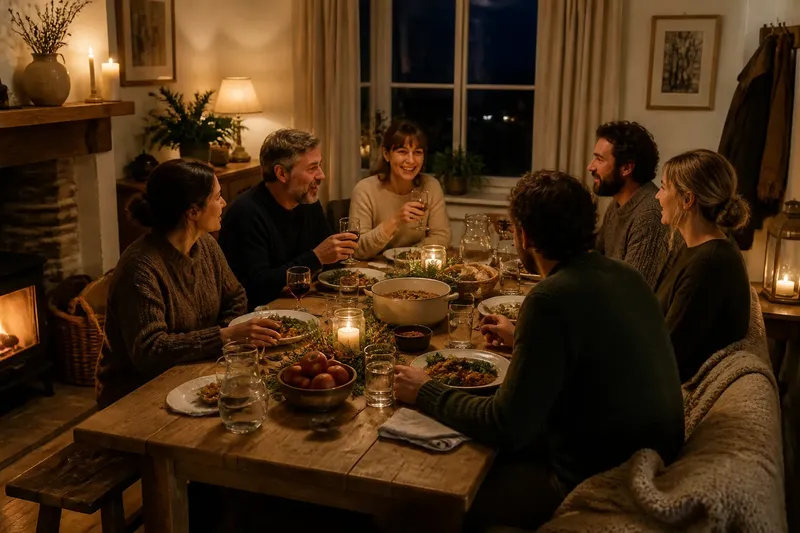
How do you set a winter supper table that encourages people to stay and talk? Start with the room’s comfort, not the crockery: a winter supper table works best when guests can sit easily, reach what they need and enjoy the meal without feeling hurried.
Imagine that you are hosting six neighbours on a cold evening in a narrow cottage dining room. The table is long enough for the meal, but the chairs are mismatched, the doorway is busy and the menu needs tending at the hob. Treat this as a planning exercise: each choice should make the evening easier to share, rather than turning the table into a display.
Plan the winter supper table around the room
Begin by walking the route guests will take from the door to their seats. Leave a clear path past coats and bags, and check that chairs can be pulled out without striking a wall, radiator or sideboard. If the table is too close to the doorway, shift it before laying anything; a welcoming room should not make people squeeze past one another.
In the cottage, the host moves the table slightly towards the window and places a small bench against the wall. The bench gives the room more flexibility than another bulky chair, while leaving the route from the kitchen open. A folded blanket nearby offers warmth without requiring anyone to sit in a draught or crowd around a heater.
Count the places people can sit comfortably, not just the number of plates that fit. A chair with a firm seat and a back is preferable for a long meal; a low stool may be useful as a spare but less comfortable for lingering. Test the arrangement by sitting down and passing a serving dish across the table before guests arrive.
Choose seats that make conversation easy
People tend to talk more naturally when they can see one another without twisting around a tall arrangement or leaning over a crowded centrepiece. Keep the table’s middle low. A few small jars with winter greenery, a bowl of apples or a simple candle holder can add a seasonal note without blocking faces or taking up serving space.
For the invented cottage supper, the host places the most comfortable chairs at the ends and alternates them with the lighter chairs along the sides. The bench is kept for two guests who know each other well, so neither has to feel wedged between unfamiliar people. This is not a seating rule; it is a reminder to consider who may appreciate a little extra ease.
Think about sound as well as sight. A room with bare boards and hard walls can make several conversations feel sharp, so a rug under the table or curtains at the window may soften the space. Keep fabric away from candles, and use stable holders placed where sleeves and serving dishes will not brush them.
Set the table for an unhurried meal
Use the crockery and cutlery that suit the food, rather than setting out every piece you own. Put water within reach and place shared dishes where guests can pass them without stretching across another person. If the table is narrow, serve some food from a sideboard and bring it in when needed instead of filling the centre before anyone sits down.
The cottage host chooses a one-pot supper that can wait briefly while guests arrive, with bread and a bowl of greens ready to serve. The meal has a clear first course and a simple pudding, but no elaborate sequence that keeps the host away from the room. The observable aim is a host who can sit down too, not a menu that demands constant attention.
Prepare a small service area on a nearby surface: serving spoons, a jug of water, napkins and any condiment the meal needs. Put used plates somewhere out of the main conversation space, but do not treat clearing as an urgent task. A short pause between courses gives people time to finish talking and lets the room settle.
Let the evening find a comfortable pace
Agree with yourself in advance what can wait. The host in this imagined supper leaves the washing-up until later and asks one willing guest to help bring the pudding through. That small request is optional, not an expectation; it works because it is easy to decline and does not turn hospitality into a rota.
Keep the lighting warm enough to make the table inviting while leaving the route to the kitchen visible. A lamp on a side table can do more for the atmosphere than a bright overhead light, provided it does not leave anyone struggling to see their plate. If candles are part of the setting, keep them steady and supervised, away from loose sleeves, greenery and curtains.
As the meal ends, offer tea or coffee where people are already sitting, rather than signalling that everyone should move on. In the cottage, the host clears only the serving dishes, brings out mugs and lets conversation continue. The room’s layout has made this possible: guests can remain seated, and the host is not trapped in a separate work zone.
What should you consider before guests arrive?
How do I make a small dining room feel less cramped?
Remove anything that does not help the meal, such as an extra side chair or a large centrepiece. Keep the path to the door and kitchen clear, and use a nearby surface for dishes that would otherwise crowd the table.
What can I serve if I want to stay at the table?
Choose food that can be prepared ahead and served without repeated trips to the hob. A casserole, soup with bread or a baked dish can suit the occasion, with a simple pudding that does not need last-minute attention.
How should I handle guests who arrive at different times?
Offer a warm drink and a place to sit while the rest of the group gathers. Keep a small first bite ready if the meal cannot begin promptly, but avoid making late arrivals feel that the whole evening has been waiting on them.
When should I clear the table?
Clear what is in the way, rather than removing everything as soon as a plate is empty. Ask whether guests would like tea before moving dishes, then leave the table comfortable for the next part of the evening.
Take the useful lesson from the imagined supper
In this hypothetical cottage gathering, the starting point was a tight room, awkward seating and a menu that could have kept the host busy. The host opened the route through the room, chose seats for comfort, kept the table centre low and served food that allowed everyone to settle. The expected result is visible in the arrangement: guests can move freely, reach the meal and continue talking without the host disappearing between courses.
Use the same decision-making for your own winter supper table, adapting it to your room and guests. Before setting out plates, sit in each place, check the path to the kitchen and ask whether you can serve the meal without abandoning the conversation. A supper that leaves room for people to linger is often the one that feels most hospitable.