Country Show or Village Fair: Two Kinds of Gathering
Country show or village fair: learn how display, exchange and meeting shape each gathering, so you can choose the one that suits your day.
Should you spend your Saturday at a country show or a village fair? A country show or village fair can look similar from the gate: stalls, food, families and a programme on a noticeboard. The difference often lies in what the gathering asks people to do. One may centre on displaying skill, livestock or produce; another may be organised around local exchange and a chance to meet.
Neither format is fixed. A village fair might host a keenly judged flower tent, while a country show can be as much a social reunion as a competition. Look at the programme, the stallholders and the way the day is paced. Those details tell you more than the event’s name.
A country show gives display a public stage
At a country show, the centre of gravity is often the thing being presented for others to see and compare. That might mean livestock classes, horse displays, machinery, gardening, baking or handiwork. The schedule can move from one ring or pavilion to another, with results and demonstrations giving the day a sequence.
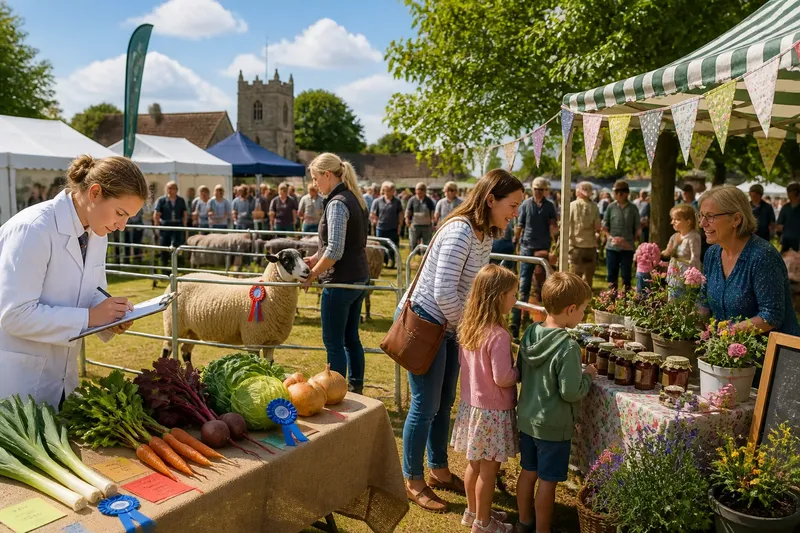
Display does not have to mean grand spectacle. A row of carefully prepared vegetables or a pen of sheep can draw attention because visitors get to examine differences up close. Judges, ribbons and category cards make those distinctions visible, but visitors can also simply watch, ask a steward what a class involves and decide what interests them.
This format suits people who like a clear programme and a reason to wander between areas. It can also work well for families who want to choose a few particular events rather than stay for every activity. Check timings before setting off: an arena event or prizegiving may be the main attraction, and missing it can change the shape of the visit.
For exhibitors, the show offers a public occasion to share a skill or put an animal, crop or crafted item forward for judgement. For spectators, the pleasure may be quieter: noticing how a display is arranged, seeing a demonstration, or learning what the judges are looking for. You do not need to enter anything to take part in that attention.
A village fair puts local exchange and meeting in the foreground
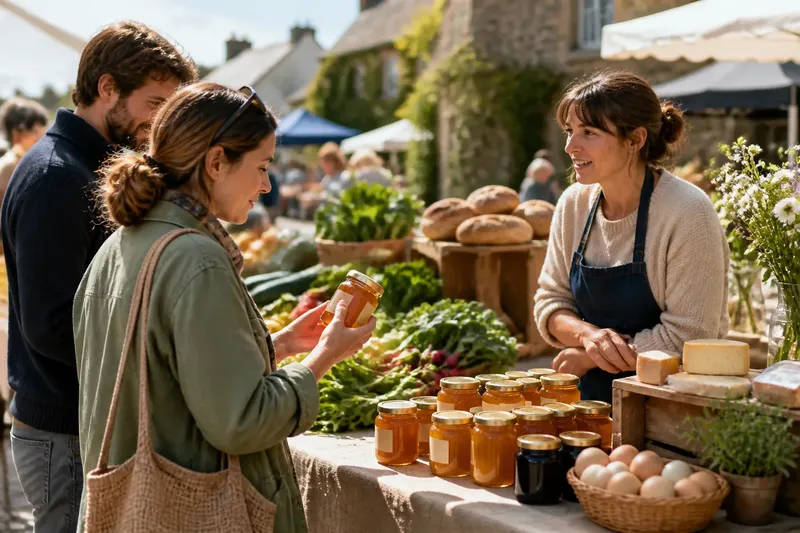
A village fair may feel less like a sequence of judged displays and more like a temporary meeting place. You might find a jumble stall, a tombola, a school table, a local group collecting for its next project, or neighbours selling plants and preserves. The programme can still include races, music or a dog show, but the stalls and conversations often set the pace.
Exchange here can mean more than buying and selling. People pass on useful objects, share news, support a club or discover who makes something nearby. A familiar face behind a table can make it easy to ask how a group meets or whether a local event welcomes newcomers. The fair’s value may lie in those small contacts as much as in anything carried home.
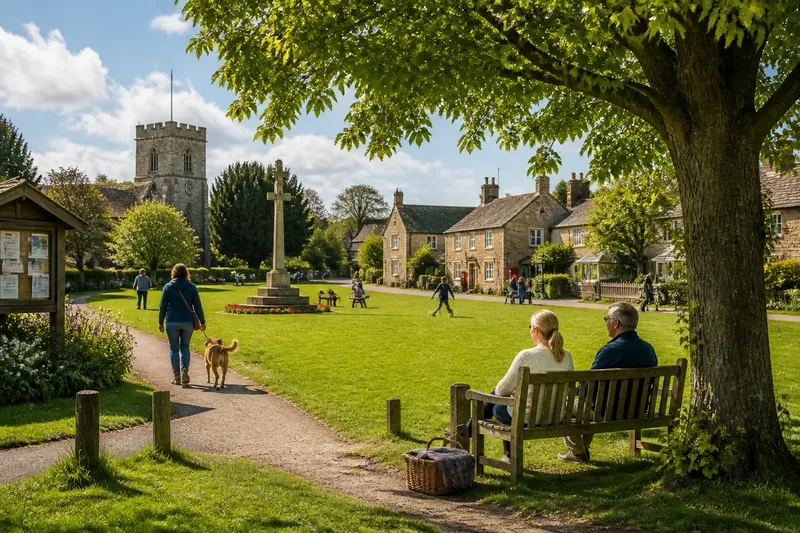
This kind of gathering suits someone who prefers to browse without committing to a timed programme, or who wants a gentle way into local life. It can suit children who enjoy simple games and adults who like to linger over stalls. If you are visiting from outside the area, keep expectations open: the most interesting parts may be informal and not listed as headline events.
There is overlap. A village fair can include competitive baking or a horticultural tent, and a country show can bring together local clubs and sellers. Rather than sorting events by their names alone, notice what occupies the programme, what people gather around and what the organisers invite visitors to do.
Choose by the kind of day you want
Start with your reason for going. If you want to watch a skill being demonstrated or compare entries in a particular class, look for a show programme with ring times, judging or scheduled demonstrations. If you want to browse, chat and support local groups, look for a fair with community stalls, games and open-ended activities.
- For a focused visit: choose the event with a timetable built around the display or demonstration you care about.
- For an unhurried outing: favour a programme that leaves room to wander between stalls and sit down.
- For children: check for age-appropriate activities, places to pause and a layout that makes moving between attractions manageable.
- For meeting local people: look for community groups, school or club stalls, and activities where visitors can join in.
- For entering an exhibit: read the organiser’s class rules and closing times before bringing an item or animal.
Practical details can settle a close choice. Check the venue map, entry arrangements, transport, accessibility information and whether the event is mainly indoors or outdoors. A show spread across fields may take more walking than a compact fair on a village green, while a busy pavilion can be awkward if you need room for a pushchair. Follow the event’s own guidance on what visitors may bring and where animals are permitted.
Imagine you have one free afternoon and want your children to see local skills without spending the whole visit moving between scheduled events. You could scan both programmes for a short demonstration, then choose the gathering with nearby informal activities and a place to sit. The expected result is a visit with one clear point of focus and enough flexible time for the children to explore at their own pace.
What should you look for before you go?
How can you tell whether a country show focuses on competition?
Look for class lists, judging times, prizegiving or named rings and pavilions. If these take up much of the schedule, expect the day to revolve around entries and displays, even if there are also stalls and food.
What makes a village fair feel community-led?
Notice who is organising it and who appears among the stallholders: local clubs, schools, charities and residents often signal a strong community focus. A programme of games, informal performances and open browsing can reinforce that feel.
Can a country show be a good place to meet people?
Yes. Shared displays and demonstrations give visitors natural subjects to talk about, and local organisations may have stands of their own. If conversation is part of your aim, allow time to linger rather than planning every moment around the timetable.
Which gathering is better for a first visit to an area?
Choose the one whose activities match how you prefer to meet a place. A fair may offer easy conversation through stalls and games; a show may introduce local skills, animals and produce through focused displays.
Let the programme reveal the gathering’s character
When deciding between a country show or village fair, read beyond the title and look for the event’s centre of attention. A timetable packed with classes and demonstrations points towards display; a cluster of local stalls and participatory activities points towards exchange and meeting. Where both appear, choose according to the part you most want to spend time with.
Then leave a little room for the unexpected. A brief conversation with a stallholder, a demonstration you had not planned to see or a familiar activity shared with neighbours can become the part you remember. The best choice is the gathering whose pace makes space for the way you want to spend the day.