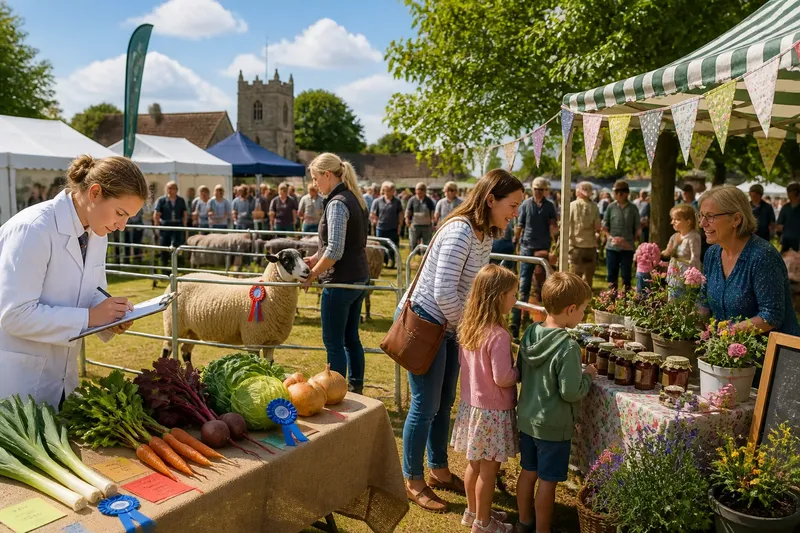
What a Village Green Is For, Beyond Its Open Space
A village green is more than open space: learn how to read its paths, pauses and local customs before using it or joining in.
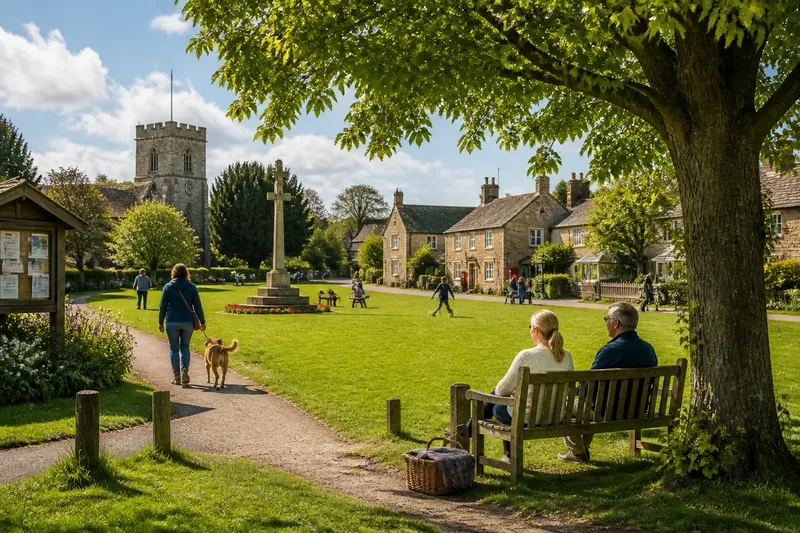
What is a village green for, beyond giving a village a patch of open space? A village green can be a route to the shop, a place to sit after a walk and a shared setting for local activities, but its meaning comes from how people use it. If you are new to a village or planning a visit, watch the place before treating it as an empty lawn.
Start by reading the green from its edges
Approach on a public path and notice where people enter and leave. A worn track towards the post office, church, bus stop or footbridge may be part of everyday passage, not an invitation to cross every part of the grass. Look for gates, signs, benches, noticeboards and mown strips; each can show how the green is divided between movement, rest and care.
Then pause without blocking a gateway or narrow path. See whether people cut across briskly, walk dogs around the perimeter, sit near a particular tree or gather by a memorial. These small habits reveal more than the green’s appearance alone, though they are clues rather than permission to do everything you see.
Notice how passage and pause share the ground
A green often works as a commons in the everyday sense: people with different purposes use the same space at different moments. Someone may cross on the way home while a neighbour rests on a bench, and children may use an open area without claiming the whole green. The practical question is where your activity fits without making another person’s ordinary route harder.
Choose a place to stop that leaves clear access to paths, seats and entrances. If you are meeting someone, agree on an obvious landmark such as the noticeboard rather than waiting in the middle of a track. Keep bags, pushchairs and bicycles close to your group, and move them if people need to pass.
Check local habits before taking part
Look at the parish noticeboard, council website or village hall notice for information about events and everyday use. A green might host a seasonal gathering, a community planting day or informal play, yet those uses can depend on local arrangements. Ask a resident or the parish council if a sign is unclear or you are considering an activity that takes up space.
Say you have just moved into a village and want to meet a friend on the green with a small picnic. You might choose a bench away from the main path, take your rubbish home and keep the entrance clear; the observable result is that walkers can continue through while you sit without occupying a route or fixture others need.
Use the green without turning it into your own space
Keep your visit light on the ground. Take litter with you, avoid trampling planted areas and leave seats available for others when the green is busy. If you bring a dog, follow posted rules and prevent it from disturbing people, wildlife or any activity taking place nearby.
- Check signs and notices before setting up or organising an activity.
- Choose a spot beside, not across, the main route.
- Keep noise at a level that suits a shared public place.
- Take food packaging and other rubbish away with you.
- Leave memorials, planted beds and community fixtures undisturbed.
- Ask before attaching anything to a tree, fence or noticeboard.
For organised use, such as putting up a stall or arranging a group activity, contact the parish council or the body named on local notices. The rules may differ from one green to another, so check the relevant local guidance before making plans.
Why does a village green feel different from a park?
Is a village green simply a public lawn?
Not necessarily. Its paths, fixtures and customary uses can make it a working part of village life, with people passing through as well as stopping there.
Can visitors walk across a village green?
Often, people use greens as informal routes, but access and permitted activities depend on the particular place. Follow visible signs and established paths, and ask locally if the route or boundary is uncertain.
How can I tell whether an event is welcome?
Check the parish or council noticeboard and look for contact details for the organiser or managing body. An event already taking place does not automatically mean that a separate gathering can use the same space.
What should I do if local customs are not obvious?
Choose a low-impact way to visit: stay on open ground, keep routes clear and observe how others use the space. A brief question to a local resident or parish contact is more reliable than assuming one village’s habits apply elsewhere.
Let local use shape your visit
A village green is understood through repeated, ordinary choices: where people cross, where they pause and how they make room for one another. Learn those patterns on a quiet visit, then adapt your plans to the green you are actually standing on. For a village green, that attention is often the difference between merely occupying open space and using a shared place considerately.